
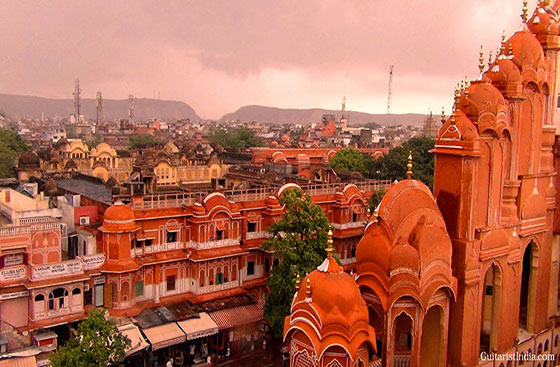
The city that once was the capital of the royalty of the county, is now the capital of the princely state of Rajasthan. Located 260 km. from the capital of the country, New Delhi, this city is full of colour and grandeur. The ancient testimonials in the form of mind blowing monuments such as Hawa Mahal, Amer Fort, City Palace, Albert Hall are amongst the best in the county. The city also popularly known as the Pink City is also very popular for shopping amongst the tourists and locals.
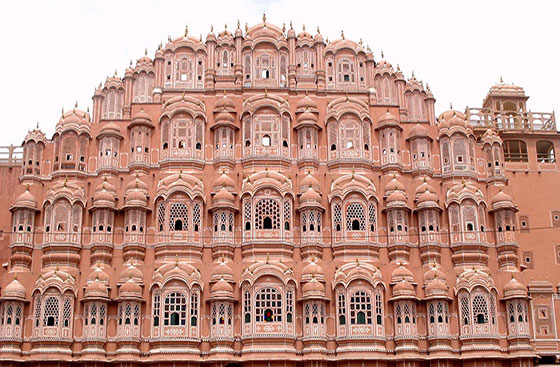
The huge confection is a trompe l'oeil in masonry, for it tends to deceive the eye. In truth, the Hawa Mahal is all facade, an elaborate palace exterior complete with nine hundred and fifty three windows and niches of inconceivable delicacy. However behind this facade are no buildings, for it is a maze of corridors and resting points. The royal women of the zenana used to peep out and see the city, or watched processions passing down below. The clever facade also trapped the breeze, earning it the name "Palace of Winds".
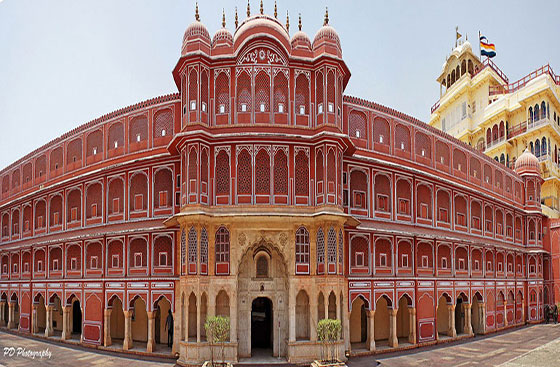
The spectacular City Palace is the residence of the former ruling family of Jaipur. It occupies the center of the city, covering one-seventh of its area and surrounded by a high wall - the Sarahad. The architecture combines elements of Rajput beauty with Mughal spaciousness and English linear planning. The Jaipur royal family resides in what is known as the Peacock Courtyard, although this is no longer open to the public.
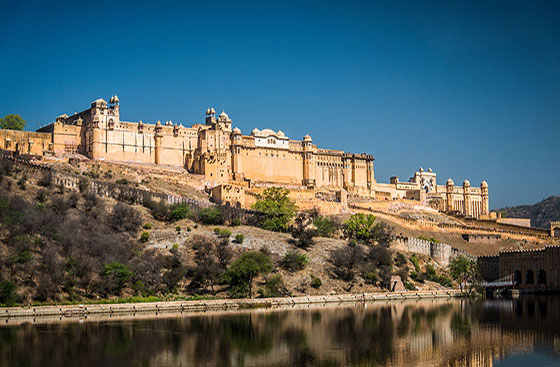
Amer, "The Fortress Palace" was one of the most important of all Rajput cities. It was the ancient capital of the Kacchwaha Rajputs from the 12th century until the foundation of Jaipur in the early 18th century. The seventeenth century fort complex at Amer occupies a steep hillside, overlooking the strategic pass that gave entry to the kingdom of the Kacchwaha Maharajas from the Mughal territories to the north.
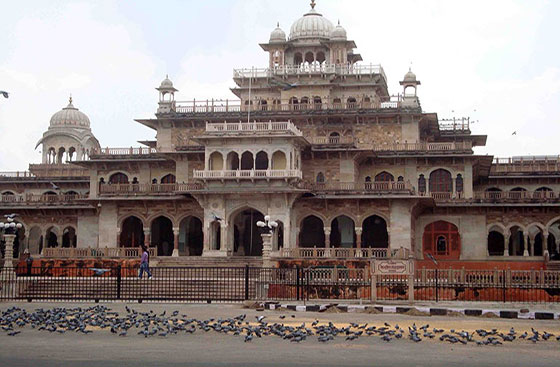
It is erected in the middle of Ram Niwas Garden of Jaipur. It was built in 1876 to mark the visit of Prince of Wales to the city. The building is made of sandstone and marble in Indo-saracenic style. It contains a fine collection of sculptures, paintings, decorative art objects, natural history specimens, an Egyptian mummy and a celebrated Persian Garden Carpet.
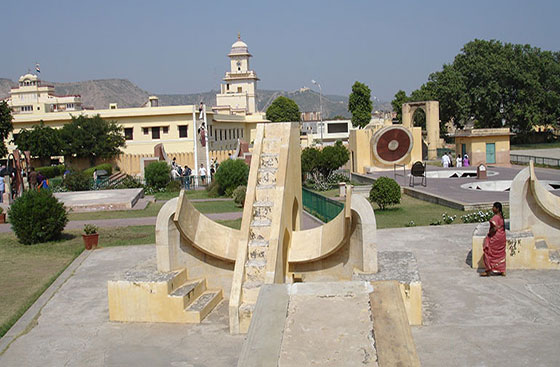
Literally "instruments for measuring the harmony of the heavens", the Jantar Mantar Observatory was built between 1728-1734. Not content with brass, Jai Singh II wanted things on a grand scale and chose stone with a marble facing on the important planes. Each of the instruments serves a particular function and each gives an accurate reading. It is said that Indian kings viewed themselves as "Universal Emperors wielding the wheel", an emblem that represented the universe. This meant that the correct time had to be fixed for each event. Astrologers were hired to regulate actions within the palace and, by extenuation, within the entire kingdom.
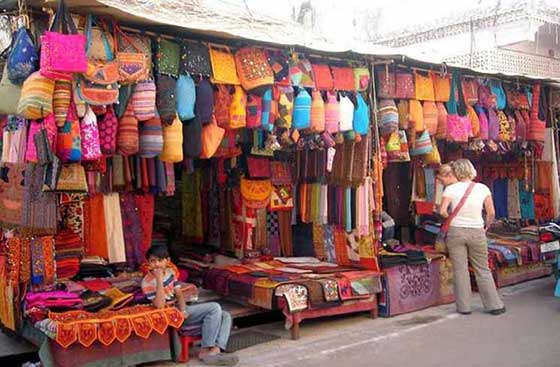
Johari Bazar literally means jewellers market. It is a long stretch of road in the old part of the town with shops on either side of the road. The famous HawaMahal is just beyond the main Jaipur shopping area in this road.There are several shops in this market that sell gemstones, silver and gold jewellery.Traditional jewellery includes Kundan jewellery (cut and polished glass/gemstones on pure gold or metal base) polki jewellery (uncut diamond in gold base) and enamel work jewellery, also known as ‘Minakari’, which is famous in Jaipur. There are several other shops that sell saris, salwar suit pieces, scarves, stoles, semi precious stones and gems, silver jewellery, lac bangles, razais(Rajasthani quilts) and bed covers. The National Handloom Corporation is a Government owned shop that stocks everything under one roof.
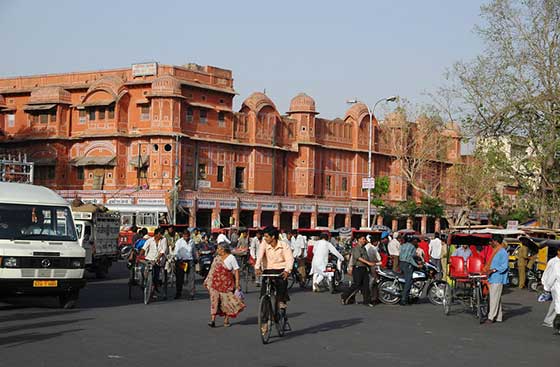
Some of Jaipur’s best shopping experiences are to be found in city’s old bazaars. These are located in the walled city, around the two main blocks called the Badi and Chhoti Chaupar. Embroidered apparel, carry bags, silver jewellery, real gems, regal rugs — what more could you want? Jaipur has them all and much more at cheap rates if you know the art of haggling well. There are some alleys and lanes that are some of the best-kept shopping secrets in Jaipur for fashion ladies and gentlemen. Visit them for a first-hand experience of the city's long-standing tradition of craftsmanship, and to get schooled in the art of bargaining while you're at it. In the meantime, take a peek into the kind of stuff you should get your hands on as you go about shopping in Jaipur.
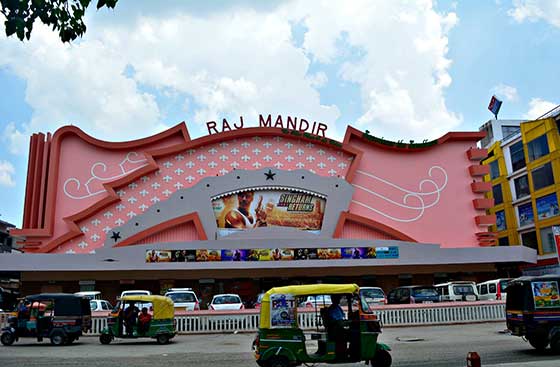
Raj Mandir Cinema is a famous movie theatre in Jaipur in Rajasthan state in India. Situated on the Bhagwan Das Road, near M.I. Road, the meringue-shaped auditorium opened in 1976, and over the years has seen many movie premieres of Hindi films, and has become a popular symbol of Jaipur. It was designed by architect W.M. Namjoshi in Art Moderne style (Streamline Moderne or late Art Deco). Known for its large size as well as opulent and meringue interiors, Raj Mandir remains an important part of the tourist circuit, and thus usually remains full despite its size.
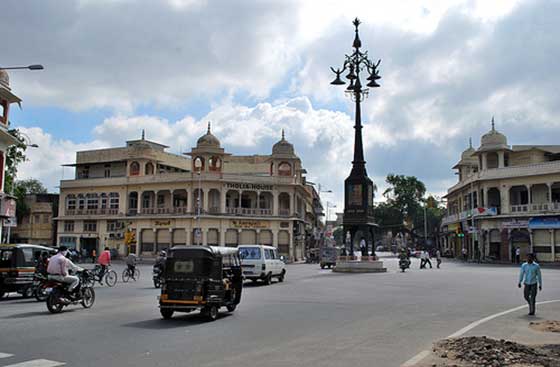
Mirza Ismail Road, popularly known as M. I. Road,[citation needed] is one of the main roads in Jaipur city in Rajasthan state in India. The road runs from Sanganeri Gate to Government Hostel.The road is named after Sir Mirza Ismail the Prime Minister of Jaipur Princely State. Jaipur was designed in such a way that all major roads of other areas eventually leads to M. I. Road. It is thus also called the heart of Jaipur.
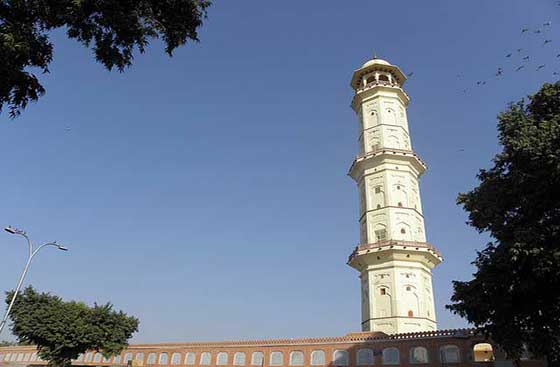
Ishwar Lat or Swarg Suli or Heaven-piercing minaret is the 60 ft highest building of wall in the Tripoli Bazaar of Jaipur. Sawai Ishwari Singh built it in 1749 A.D to commemorate a grand victory against his brother Madho Singh in Bagru war. Ishwar Lat is famous as it offers one of the most breathtaking views of the Jaipur city. Some believed in another story behind this structure construction.The sole purpose of Ishwari Lat creation was tthe love of Maharaja Ishwari Singh for the beautiful daughter of Prime Minister argobind Natani. Maharaja look at daughter who livwed in a haveli opposite to Swarg Suli, since protocol did not allow him to go inside her house.
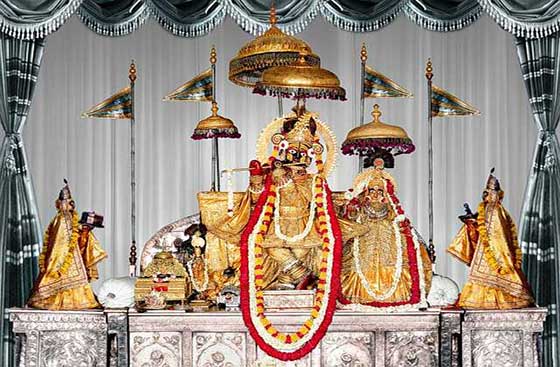
The Vaisnava temple Govind Dev Ji is situated in Jaipur in Rajasthan state of India. It is located in the City Palace complex. The temple is dedicated to Govind Dev Ji (Lord Krishna).This temple is among the 7 temples of Thakur of Vrindavan including Sri Radhavallabh ji, Shri Bankey Bihari Ji, Shri Govind Dev Ji and four others. The image of the deity (murti) was brought from Vrindavan here by Raja Sawai Jai Singh II, the founder of Jaipur. And this temple was built by mugal badshah Akabar.According to popular legend, Lord Krishna's image in the temple looks exactly like Krishna's form during his incarnation on Earth.
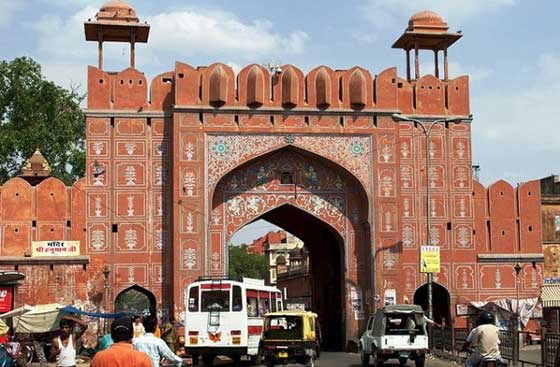
Badi Chaupar (literally "Large Square"), also known as Manak Chowk, is a public square in Jaipur, India. It is one of the two major squares constructed by the King of Amer. The Badi Chaupar metro station is located in this area. Chhoti Chaupar ("small square"), also known as Amber Chowk, is another major square located nearby. Tripolia Bazar, the central bazaar (market) of Jaipur, is located between these two squares. The Badi Chaupar area is a hub of artisans, jewelers and craftsmen.
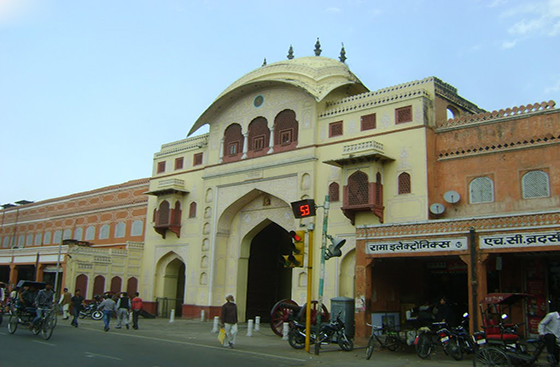
Tripolia means three gates. It was constructed in 1734, at the same time as the seven-storey Chandra Mahal. It is a gate with pretty balconies enclosed by jaalis at the top end. You will have noticed these pretty jaali screens on several important buildings. They were not there for purely decorative purposes; they had a very important function - to allow ladies to watch the processions, street scenes without being seen. These latticed balconies were for the exclusive use of royal ladies. Walk past the gate and keep going straight. You are still in Tripolia Bazar, heading towards Badi Chaupad with many interesting things to see on the way.
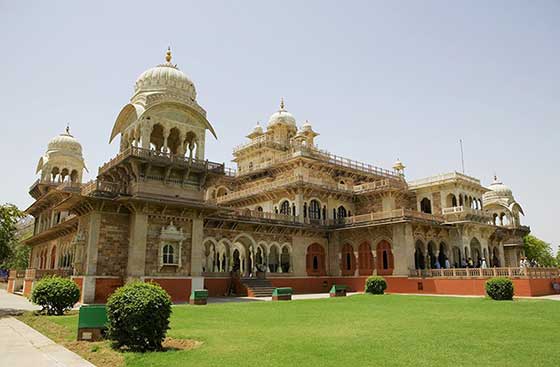
The Ram Niwas Gardens are the green central open space for the city to breathe fresh air but the park is far from a paradise to relax and avoid the hassle that Jaipur so often presents.The park was built during the era of Maharaja Sawai Ram Singh who wished green landscaped grounds surrounding the Albert Hall.
The Jaipur Zoo is India’s oldest Zoo and was constructed as part of the Ram Niwas Gardens in 1877. The zoo has been divided into two sections one half for animals the other for birds. Though not the worst in India it is not at the same standard as western zoos with some small cages and sad looking animals.
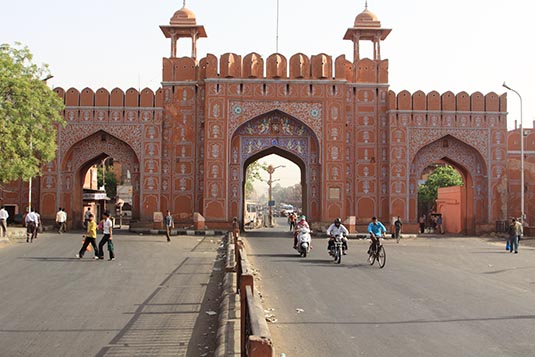
Ajmeri Gate is based in the state of Rajasthan, in the heart of beautiful Pink City - Jaipur. The stronghold of a clan of rulers whose three hill forts and series of palaces in the city are important attractions. Known as the Pink City because of the colour of the stone used exclusively in the walled city, Jaipur's bazaars sell embroidered leather shoes, blue pottery, tie and dye scarves and other exotic wares.
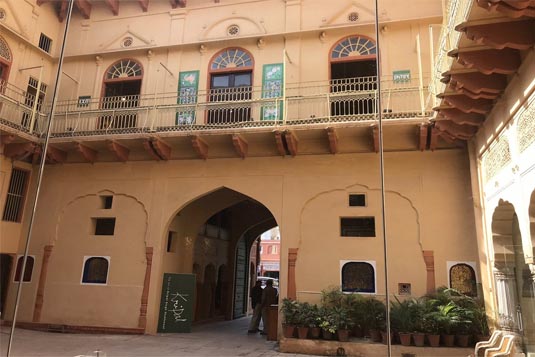
Housed in a 200-year-old building, the Museum of Legacies is located in the heart of Jaipur, the pink city. This is not merely a traditional museum but also a space for art enthusiasts, workshops and exhibitions. The displayed collections include paintings, textiles, jewellery, stoneware, inlay works, photographs and more. The building itself can be considered the main artefact as it is steeped in history. Constructed in 1823 as the residence of Pandit Shivdeen, a minister in the court of Ram Singh II, it housed the school of art from 1857 onwards, which ran for about 160 years. Later, the state government decided to convert it into a museum and so, on December 9, 2017, it was renovated by Smart City and established as the Museum of Legacies. The building complex has three floors and a number of galleries displaying various artefacts by different art collectors.